RECOGNIZING NEUROTROPHIC KERATITIS (NK)

Staining and a Corneal Sensitivity Test Can
Confirm NK Diagnosis Using Tools You Already
Have in Your Practice1,*

When fluorescein staining is performed without anesthetic eye drops,
corneal sensitivity can be conducted in the same appointment2

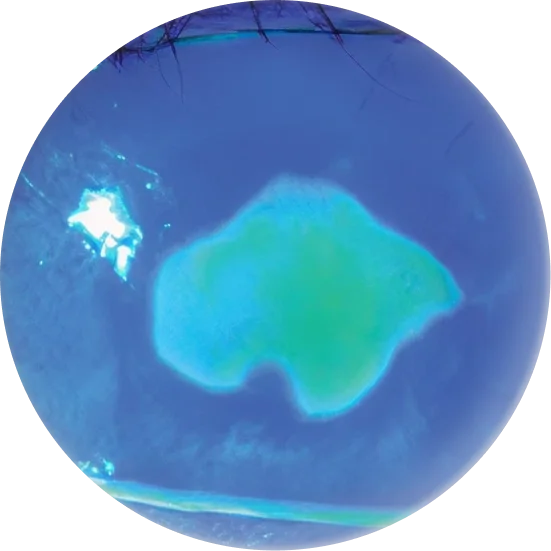
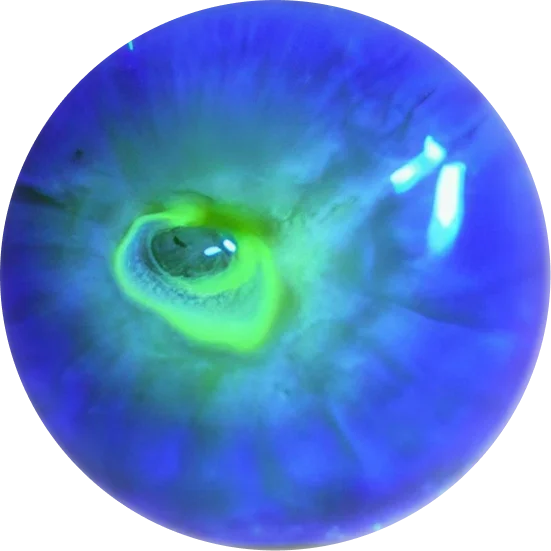
NK is classified by stage and recognizable by distinct staining patterns3

STAGE 1 STAGE 2 STAGE 3

DEFINED BY

  • Punctate corneal epithelial fluorescein staining
  • Decreased tear breakup time

DEFINED BY

  • Epithelial defects, typically oval, in the central/superior cornea and surrounded by a rim of loose epithelium, accompanied by stromal swelling

DEFINED BY

  • Stromal lysis and melting
  • Potential perforation

Images sourced from Font C et al in Indian J Ophthalmol, 2025 and Dua HS et al in Prog Retin Eye Res, 2018.

When fluorescein staining is performed without anesthetic eye drops, corneal sensitivity testing can be conducted in the same appointment.2

Corneal sensitivity testing is a straightforward evaluation to
confirm NK
, performed with tools already in your office3

Corneal sensitivity testing assesses patient reactions to brief simulation.3
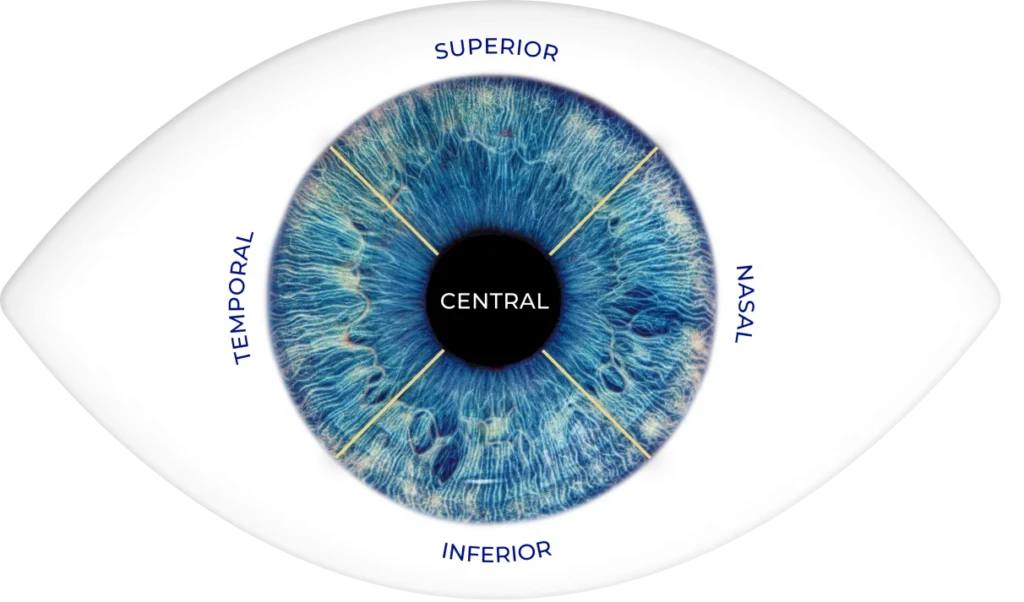

  1. Use a cotton wisp or dental floss (a Cochet-Bonnet esthesiometer can also be used).2
  2. Start with the unaffected eye to establish a baseline (start with the healthier eye in patients with bilateral disease).4
  3. Approach the cornea laterally and lightly touch each of the 5 zones.4
  4. Move to the affected eye and test every section, as reduced sensitivity may be restricted to only the damaged area, with normal sensation in the rest of the cornea.3
  5. Record results for each zone as normal, reduced, or absent.4

Reduced or absent sensation in at least 1 zone confirms NK.3,*

Documenting corneal sensitivity test results may be important for a prior authorization.

*In conjunction with patient history and clinical findings.1

With a definitive diagnosis,
you can treat NK with OXERVATE®

Learn more

Sign up for resources and new information

For US healthcare professionals only.

This field is for validation purposes and should be left unchanged.
Fields marked with an asterisk are required.
Name(Required)
Consent to Marketing Communications and Data Use

By checking this box and submitting this form, I consent to Dompé collecting, using, and processing the personal information I provide, including information that may relate to my health condition or treatment, to send me educational materials, product information, support resources, market research communications, and other marketing information about OXERVATE® or related services.

I understand that Dompé may share my information with service providers, contractors, business partners, or vendors acting on its behalf to deliver these communications and services. My information will not be sold.

I understand that providing this consent is voluntary, there is no cost to me, and my decision will not affect my ability to receive OXERVATE or any other medical care or medications.

I may withdraw my consent at any time by following the instructions in the Privacy Policy.

By clicking SUBMIT, you agree to our Terms of Use and Privacy Policy.

This site is protected by reCAPTCHA.

Indication and Important Safety Information

WARNINGS AND PRECAUTIONS

Use with Contact Lens
Contact lenses should be removed before applying OXERVATE because the presence of a contact lens (either therapeutic or corrective) could theoretically limit the distribution of cenegermin-bkbj onto the area of the corneal lesion. Lenses may be reinserted 15 minutes after administration.

Eye Discomfort
OXERVATE may cause mild to moderate eye discomfort such as eye pain during treatment. The patient should be advised to contact their doctor if a more serious eye reaction occurs.

ADVERSE REACTIONS
In clinical trials, the most common adverse reaction was eye pain following instillation which was reported in approximately 16% of patients. Eye pain may arise as corneal healing occurs. Other adverse reactions occurring in 1% to 10% of OXERVATE patients included corneal deposits, foreign body sensation, ocular hyperemia, ocular inflammation, photophobia, tearing, and headache.

USE IN SPECIFIC POPULATIONS

Pregnancy
There are no data from the use of OXERVATE in pregnant women to inform any drug associated risks.

Lactation
The developmental and health benefits of breastfeeding should be considered, along with the mother’s clinical need for OXERVATE, and any potential adverse effects on the breastfed infant from OXERVATE.

Pediatric Use
The safety and effectiveness of OXERVATE have been established in the pediatric population. Use of OXERVATE in pediatric patients 2 years of age and older is supported by evidence from adequate and well-controlled trials of OXERVATE in adults with additional safety data in children.

INDICATION
OXERVATE® (cenegermin-bkbj) ophthalmic solution 0.002% (20 mcg/mL) is indicated for the treatment of neurotrophic keratitis.

DOSAGE AND ADMINISTRATION
Instill one drop of OXERVATE in the affected eye(s), 6 times a day at 2-hour intervals for eight weeks.

To report ADVERSE REACTIONS, contact Dompé U.S. Inc. at 1‌-‌8‌3‌3‌-‌3‌6‌6‌-‌7‌3‌8‌7 or FDA at 1‌-‌8‌0‌0‌-‌F‌D‌A‌-‌1‌0‌8‌8 or www.fda.gov/medwatch.

Please see full Prescribing Information for OXERVATE.

References: 1. Dua HS, Said DG, Messmer EM, et al. Neurotrophic keratopathy. Prog Retin Eye Res. 2018;66:107-131. 2. Neurotrophic Keratopathy Study Group. Neurotrophic keratopathy: an updated understanding. Ocul Surf. 2023;30:129-138. 3. Galor A, Lighthizer N. Corneal sensitivity testing procedure for ophthalmologic and optometric patients. J Vis Exp. 2024;(210):1-11.

Indication and Important Safety Information

OXERVATE® (cenegermin-bkbj) ophthalmic solution 0.002% (20 mcg/mL) is indicated for the treatment of neurotrophic keratitis.

WARNINGS AND PRECAUTIONS

Use with Contact Lens
Contact lenses should be removed before applying OXERVATE because the presence of a contact lens (either therapeutic or corrective) could theoretically limit the distribution of cenegermin-bkbj onto the area of the corneal lesion. Lenses may be reinserted 15 minutes after administration.

EXPAND